
Gastón Voss, connu sous le nom de GENDEMA, est un musicien et designer argentin dont l’œuvre reflète un engagement profond pour la justice sociale et l’authenticité artistique. Inspiré par la culture de sa ville natale Morón dans la province de Buenos Aires, il compose des musiques instrumentales intenses, mêlant IDM, downtempo, et ambient. Pour lui, la musique est une « arme douce » qui réveille les consciences et incite à l’action collective.
GENDEMA crée seul, il compare cela à l’écriture d’un journal intime, un espace où il peut explorer et exprimer ses émotions en toute liberté, sans crainte de jugement. Bien qu’il compose et produit en solitaire, il éprouve une grande joie à partager le fruit de son travail avec ses amis. Il explore chaque genre et chaque son sans contrainte, en privilégiant un processus qui lui permet de traduire des émotions profondes et de bâtir un univers sonore singulier, influencé par des figures comme Aphex Twin et Moby. Pour lui, la musique est une forme de résistance spirituelle face aux individualismes contemporains. Sa démarche, nourrie de valeurs humanistes, cherche à renforcer les liens collectifs et à incarner une solidarité universelle.
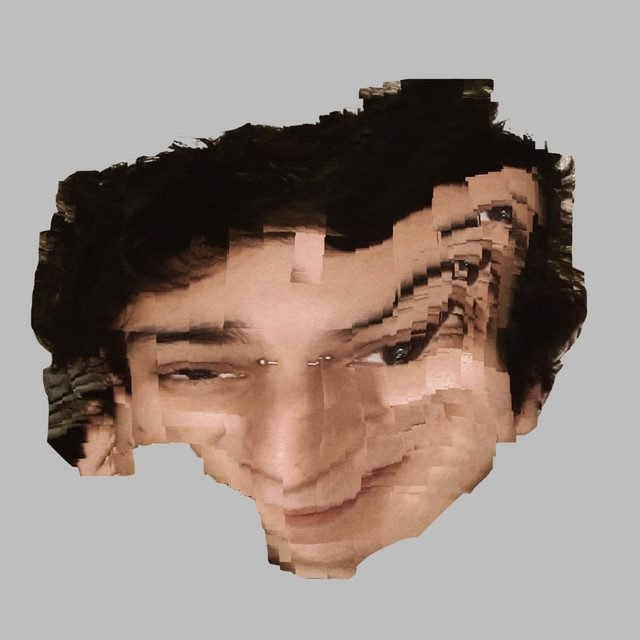
GENDEMA est pour moi l’une des plus belles découvertes artistiques de l’année 2024. Voici en anglais l’intégralité de notre conversation.
Conversation : GENDEMA x Amar Adjona
Amar Adjona
Who. are. you ?
GENDEMA
Gastón Voss, an Argentinean amateur musician and professional designer.
Amar Adjona
How do your Argentine roots influence your musical universe, and how do your personal experiences in Morón find their way into the essence of GENDEMA?
GENDEMA
I thank God regularly for having been born here. In very few countries (and I have visited quite a few) have I felt what you feel here. Here we are (and I hope that this will never change, although some have tried to change it historically) very close to each other. In a few hours you will feel like one of us, we love to receive and integrate people, to make them feel at home. And that way of life is where I was raised. For me, it’s not possible not to feel pain for the pain of the person next to me, it doesn’t matter if I know you well or not.
Culturally, religiously (not only in its Christian meaning but ritualistic) and historically, this country explains the why of its people.
Without forgetting that, in our history. There is still the dark stain of the Anglo-Saxon invasion, of the most savage imperialism. And that is something that NO Argentine will ever forget. The occupation of our Malvinas Islands and our cry for sovereignty is part of our DNA. The battle of 1982 is just one more point in the timeline, the war continues.
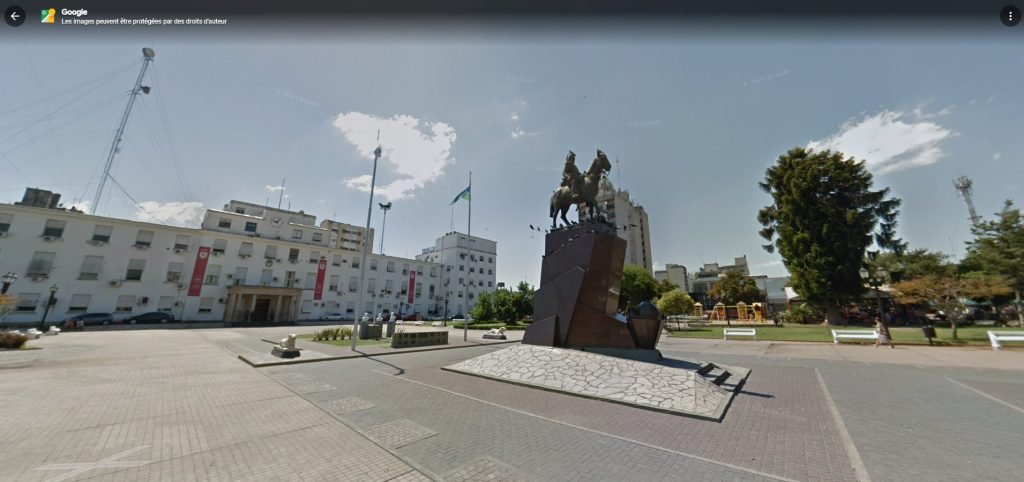
Morón is the place where I was born and I love living here. I had a happy childhood here and I have met amazing people here. It’s a great cradle of artists, by the way, it’s worth mentioning.
Gustavo Santaolalla was born in Morón, just to give an internationally recognized example.
My grandfather was always a very loved person in Morón and that ended up reaching me too. I would go to lunch places with him and they didn’t want to charge us for the food, people treated me as if I were their grandson too. In the end, I feel very lucky to have been born here.
GENDEMA is excessively Argentine and proudly Moronense.
Amar Adjona
As a composer, producer, and the master of your musical work, how do you experience this total autonomy in the creative process, and how does it impact the authenticity and intensity of your music?
GENDEMA
It’s such a personal experience for me, that I can’t imagine involving other people in the process yet, which is why I’ve also done very few featurings.
It’s like my diary, so it’s rare that someone else appears in it.
Also, I feel satisfied (although I know I could do better) with how I handle all of that. I feel that with my limited knowledge, I can generate an enjoyable product and that’s all I need.
At the same time, I know that this gives a very personal touch to my music, not only in its structure. And I think people know that. Many times I have been told that they don’t know another producer who composes like I do, not because I’m good at composing, don’t get me wrong, but because they feel it’s very « particular » in some cases.
Amar Adjona
You explore a diverse range of genres, from downtempo to ambient to IDM. Are there creative limits you refuse to cross, or conventions you enjoy deconstructing in your music?
GENDEMA
The truth is that I don’t set rules for myself when it comes to producing, in fact, I don’t even know what genres I’m going to make before producing, I’m not interested in thinking about genres when I produce music.
The only thing I know is that there are genres that I’m not interested in producing, just listening to, and some not even that.
Limitations? Beyond the ethical ones, none. Only the involuntary ones imposed by my biology.
Amar Adjona
You describe this album as a “resolved contradiction between conflict and tolerance.” Could you tell us more about how this duality manifests in your music, through specific choices in sound, rhythm, or structure?
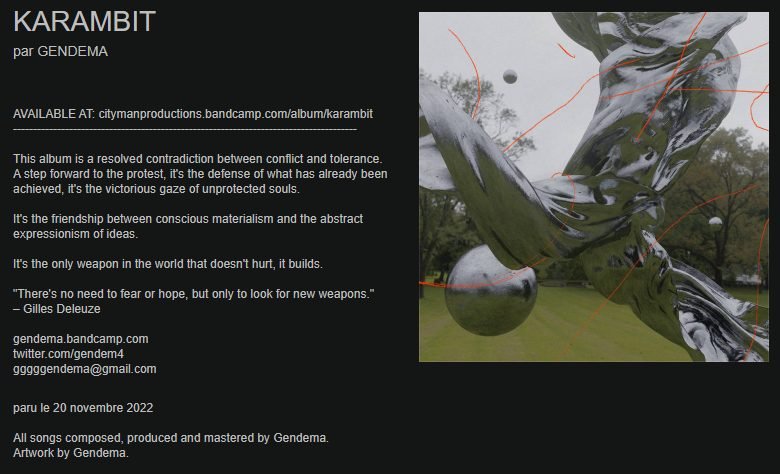
GENDEMA
I made that album at a very significant time in my life in terms of my philosophical development. It was a time when I began to consume a lot of Iranian cinema, and it was something that had a profound impact on me. I realized that in those films, there were protests, there were grievances, there was a kind of rage in the face of injustice and all of this was presented in such a beautiful, poetic way. And I liked that this art was used to express something earthly, finally something earthly, the problems of ordinary people.
Something that I didn’t find much in cinema, something that you don’t find much anywhere. Many artists live in a parallel world of their own and enjoy that fantasy. I want to stay in this world because there is so much to do here, and my spirit doesn’t allow me to be indifferent.
I am a common person (being an artist never made me position myself in any special place) and with my music I want to speak to the most common, “earthly” and daily part of people. I’m not interested in making my music into a novel, a fantasy world or anything like that. All the beauty I need to inspire me, resists in this world.
Concretely about the production of the album I don’t have so much to say. Everything I did was inspired by Iranian landscapes and culture. Hence the rhythms and percussions, the metal sounds and textures. All the music is produced under the inspiration of stories of common people who have fought for different injustices of this world, or resisted them without falling into indivisualism and selfishness.
I insist, I never have much to tell about the production beyond the hard facts because, once I am inspired, I produce in automatic mode. It’s almost unconscious, I structure sounds in the moment as it comes to my head, it’s an important level of improvisation, based on an idea of “mood” that I have in my mind.
Amar Adjona
What role do you hope your music will play in the lives of listeners, and in what way is it a weapon that builds?
the only weapon that doesn’t hurt.
GENDEMA
I hope that my music places people in this world. Not only to re-appreciate the infinite beauty that exists here, but also to not be distracted from what happens here.
When I speak of a weapon that doesn’t hurt, but builds, I mean people fighting for just causes.
I have never been afraid or ashamed to talk about violence, and I believe that unlike what we have been led to believe, violence is a very valid method to achieve just goals.
Violence in the wrong hands is terrible, but if people think they can fight against guns by putting flowers in the barrels, we are dead.
The gun that doesn’t hurt is the one that targets those responsible for hunger, not the hungry who make noise. The weapon that doesn’t hurt is that guillotine that has put an end to historical monarchies. The weapon that doesn’t hurt is the one that stops invading and plundering empires.
The weapon that builds is any weapon that is wielded by an ordinary man/woman, who works every day for his or her family and to generate community. Who cares for his neighbors, for the other. Who resists with love and empathy, in a system that wants you to stare at a screen, looking for dopamine in banalities and never look into the eyes of another person.
Amar Adjona
What creative or philosophical weapons did you discover while working on this project, and how do they influence your artistic vision?
Il n’y a pas lieu de craindre ou d’espérer, mais de chercher de nouvelles armes.
Gilles Deleuze
GENDEMA
That sentence is perfect to portray everything I had been developing internally for this album. For me, to look for new weapons is to work with cunning to solve problems. I don’t want to scare people and I don’t want to tell them “everything will be better”, I want them to move. Fear and hope often act as immobilizers. And to touch the mud, to understand the other, it’s necessary to look for answers, to move, to think.
My artistic vision is to stay close to the people. I need them to want to tell something. And I’m not afraid to spit when producing my music. For me it’s an almost tribal act.
There is no more genuine expression of me than my music, because it’s my brain spitting without filters and improvising. Then of course, before uploading it and for the full enjoyment of the listeners, all this goes through a mastering process and a etc of procedures that generate a more solid and balanced product. Because beyond my improvisation, I want the listener to enjoy these textures, melodies and rhythms in the neatest way possible.
Amar Adjona
Your album titles are intriguing and sometimes mysterious, like “Digital Reforestation” or “Luminotecnia.” How do you choose the titles, and what do they represent in your artistic journey?
GENDEMA
Just as my music genuinely represents who I am, so do the titles. And just as I improvise in the production, I often improvise in the titles as well.
In 95% of the cases, I title my songs once I’ve finished them. I listen to them 2 or 3 times and when a word comes to my head, I look for some synonyms and then I choose the one that convinces me the most.
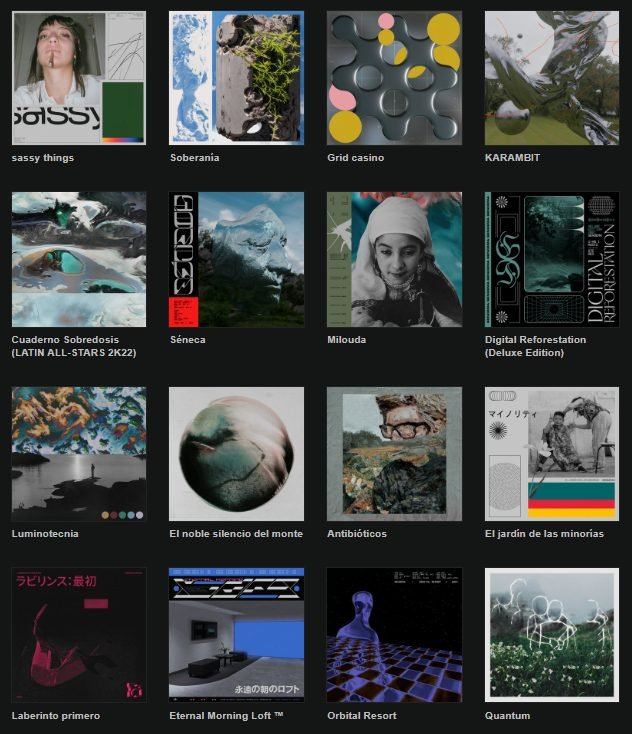
When defining the title of my albums, I try to find a concept that can bring together the sounds and titles of the songs. If I don’t succeed, I improvise again.
I have a lot of fun with this process of naming things, I take it as a game, 100% freedom. Since I take away the importance of it at a certain point. Being that for me, in music, sounds have always been more important than words, that’s why I make instrumental music.
Amar Adjona
In the description of “KARAMBIT,” you mention the “victorious gaze of unprotected souls.” Could you tell us more about what this means to you, and how it is expressed musically?
victorious gaze of unprotected souls.
GENDEMA
It’s a way of expressing resistance. It‘s a way of saying that even if no one protects us, they cannot demoralize us. The principles and values that have forged us are stronger, and the victorious gaze is typical of someone who is sure of it.
Musically I think I was able to express this through the silences and percussions. The silences and moments of almost ambient calm in my tracks, combined with those pseudo-warlike tribal percussions, make me think of a person who, just with their gaze, without opening their mouth, is warning you that they are ready to fight.
Amar Adjona
You also create the artwork for your albums. How does the transition from sound creation to visual creation happen for you, and what emotions are you aiming to evoke visually?
GENDEMA
There is a mix between Gaston the musician and Gaston the designer, obviously. With my knowledge of graphic design, I try to create a cover that is as harmonious and neat as possible, while I try to portray the thoughts I had when producing the album. And since I know myself well, I usually get good results.
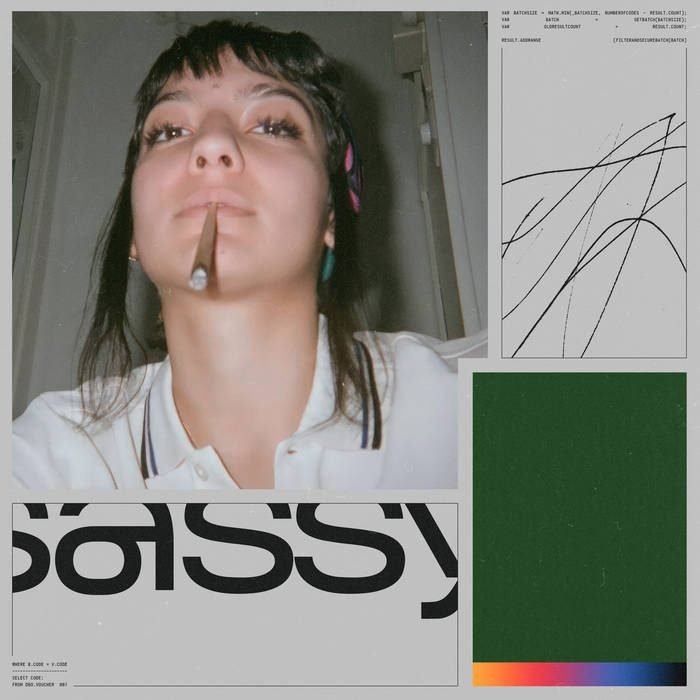
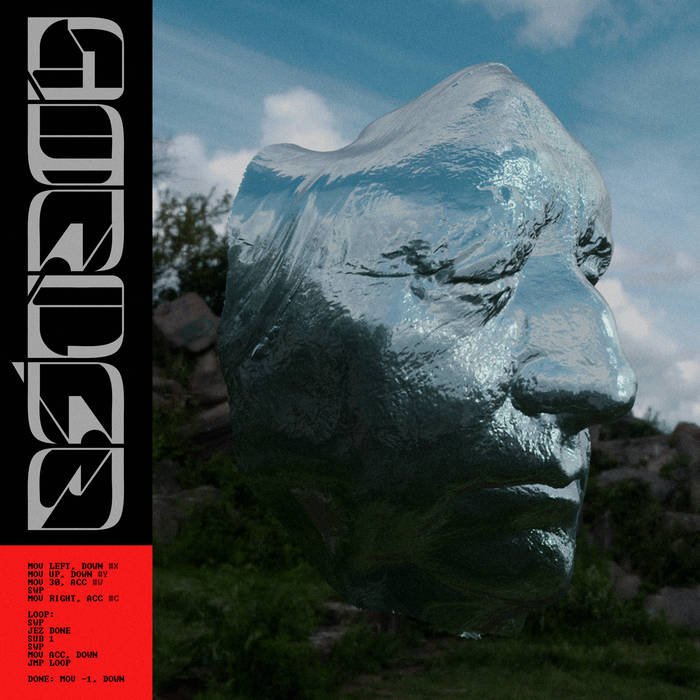
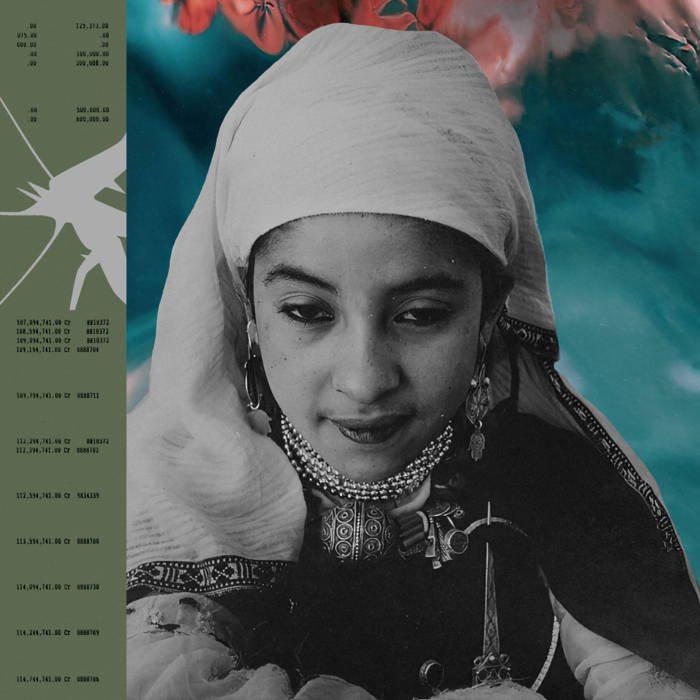
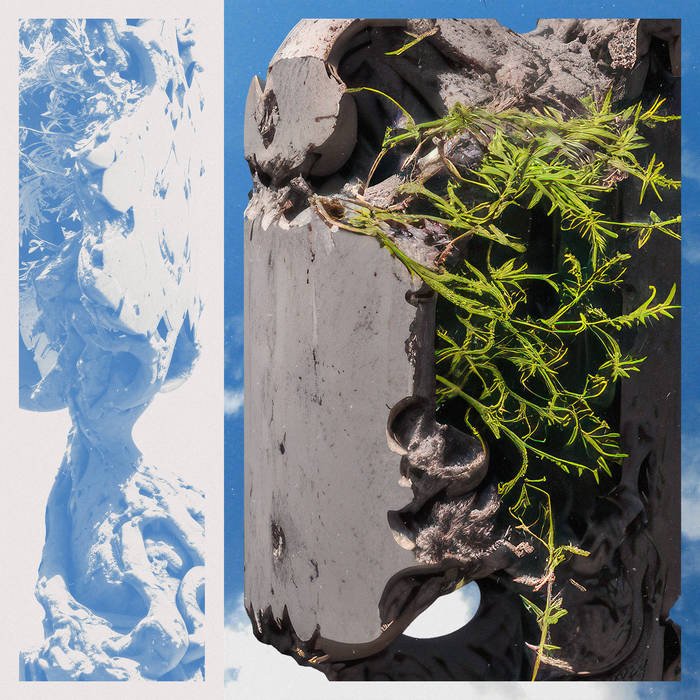
There is another important thing that happens when you are a designer. And that is that you know very well that the cover MUST have an impact. It’s not just about making something neat, but also about attracting attention. Your cover must be the best in the recommended section of YouTube.
The value of the cover of any product should not be taken away, a good album with a bad cover is like a bottle of warm water in the desert, it will help you but it will not end up feeling good at all.
Amar Adjona : What does this notion of “decorating time” mean to you in the context of your music and your personal journey? Are you referring to Jean-Michel Basquiat ?
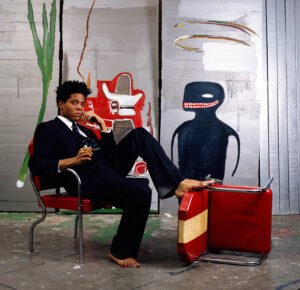
GENDEMA
Yes, I mean his phrase.
And I think this is key to understanding my musician self.
I mean, we have never really been a priority. We are ordinary people, working class, without major privileges and with all the problems of daily life of a working citizen of the southern hemisphere of the world. We will do nothing but decorate our free time with this. Ordinary people who have the soul of an artist, decorate their free time with art, they need it, they need to express themselves.
Some others try to see it as a job, which it will never be, because when art becomes a job, it stops being a genuine human expression because they are expecting a reward for it, or a remuneration. Art must be and always will be a hobby. An activity done from the heart and the brain out of simple necessity.
Amar Adjona
In what way do you consider your music an act of protest, and what aspects of the current world are you protesting against?
GENDEMA
My music protests because I protest. And I think I have my ways of shouting through my music. But, not only in an « effusive » way, I mean, many times in my music I also cry, and that for me is also a form of protest. Crying doesn’t mean it’s because of sadness, it can be because of emotion or rage.
That’s why you’ll notice various genres in my discography, because I produce the music based on how I feel.
I protest the things that I have seen and felt in my own flesh, here there are obviously many things but, it could be summarized as classism, corruption, dishonesty, immorality, genocides, cruelty to the most vulnerable, lack of nobility, individualism and the sick idea that if I’m fine that’s enough, that it doesn’t matter if the people around me are fine too.
Any country, government, ideosyncracy, or system that deviates from these principles, I will always want them far away and on the other side of the line.
Amar Adjona
In what electronic subgenre do you operate? How does technology influence your music, and how does this experimentation modify your approach to composition?
GENDEMA
There may be subgenres that escape my mind, as I don’t think about them as much as categories that I’m interested in being in or nott, but I guess I usually find myself in IDM, Drum and Bass, Ambient, Downtempo, Break Beat, Trip-hop, Future Jazz and a few more.
I started making music in 2008 when I was given my first computer. That is, my first approach to music as a creator was through a computer. I’m not an instrumentalist. I humbly play my synthesizers, but nothing more. And it remains that way to this day. Although I have a couple of drum machines and synthesizers that I use on some songs, all my music is programmed, almost nothing is played and recorded live. And I use a lot of VSTs.
My first approaches to electronic music were through Moby, Aphex Twin and Daft Punk, but since I didn’t have money to buy synthesizers, I needed to experiment with VSTs, and it was these that allowed me to express myself.
Amar Adjona
Do you have a specific ritual or routine before you start creating? What are the steps or conditions essential for you to fully immerse yourself in composition and production?
GENDEMA
Interesting question. There really is no routine as such, since for me producing music is not something planned in most cases, and the will to produce music comes spontaneously.
But there are two activities that motivate me a lot and inspire me to produce: traveling and listening to music.
Whenever I come back from a trip, I feel like producing music, and honestly I don’t quite understand why.
And when I listen to music that I find good or interesting, after enjoying it, I think: I want to do something like this. Listening to music motivates me to want to make my own. It’s like I hear rhythms that I like or compositions that catch my attention and I can’t help but want to participate in them in some way or imitate them in my own way.
Conditions when producing music? Not many. Silence the phone, keep it away from me, dim the lights in the room where I am and always have my mate, my thermos for hot water, tobacco and water by my side.
Amar Adjona
What software, instruments, or equipment do you mainly use in creating your pieces? Are there specific tools you consider essential to capture GENDEMA’s particular atmosphere, and how do they influence your sound approach?
GENDEMA
Virtually everything is software except for: A Casio XW-P1, a Korg Volca Keys, a Korg Volca Drum, and an Arturia MiniLab 3 MIDI Controller.
I do everything in FL Studio when producing, along with Arturia VSTs, Serum and Massive X, not much else. The rest are effects that I use inside FL Studio and 100 GB of Samples that I have downloaded.

Once the tracks are exported, I finish mastering in Izotope Ozone.
I consider that Arturia VSTs are fundamental for GENDEMA, they have allowed me to achieve many times the sounds I needed. Especially the more atmospheric ones.
I’m used to program sounds and play with fx, that way of producing that seems almost like writing a source code is clearly part of GENDEMA’s identity, and I think it shows when you listen to it.
Amar Adjona
If there were one word that encapsulates your essence, your creative energy, or your message, what would it be, and why that particular word?
GENDEMA
Probably something like “Vacation”.
Because that’s how I live the activities I love, and part of the reason why I love them is because I do them selflessly, out of pure and absolute pleasure and necessity. Music is where I generate all the dopamine I need. I have fun doing it and take pleasure in the results (most of the time).
Amar Adjona
What is the emotion or sensation you’d like the listener to retain after hearing one of your albums for the first time?
GENDEMA
The feeling of meeting someone for the first time and liking them very much. And you go home thinking about the excuse you’ll make up to see him/her again. And also feeling that deep down, you like him/her a little, you get a little “horny” thinking about him/her. Because of his charisma and not so much because of his “perfect” or “beautiful” image according to the typical standards.
Amar Adjona
Let’s go back to the very beginning. Was there a moment, a scene, a song, or even a silence that sparked in you the need to create music? If so, how does that moment continue to influence your journey?
GENDEMA
There are two points. The origin of Gastón (me) as a musician and the origin of GENDEMA. Since my first steps in music were not with GENDEMA but with other previous aliases, when I was very young and I made my first (super simple) electronic music songs.
But honestly, that stage when I was about 12 years old is not that interesting, I was just looking to imitate certain sounds I heard and intertwine them to make a song, with the most basic tools of FL Studio.
I always had many aliases until I found the identity with which I really felt comfortable (GENDEMA). Before GENDEMA I have uploaded music to the internet with about 10 different aliases.
GENDEMA was born at the same time as the Covid Pandemic was born, inspired (above all) by Pilot Red Sun. A GREAT artist that a friend showed me at the time and that made me feel something I had never felt before. Improvisation, nostalgia, personality, charisma. It was like meeting again with a family member who was very close to you and with whom you had a lot of fun after not seeing him for many years.
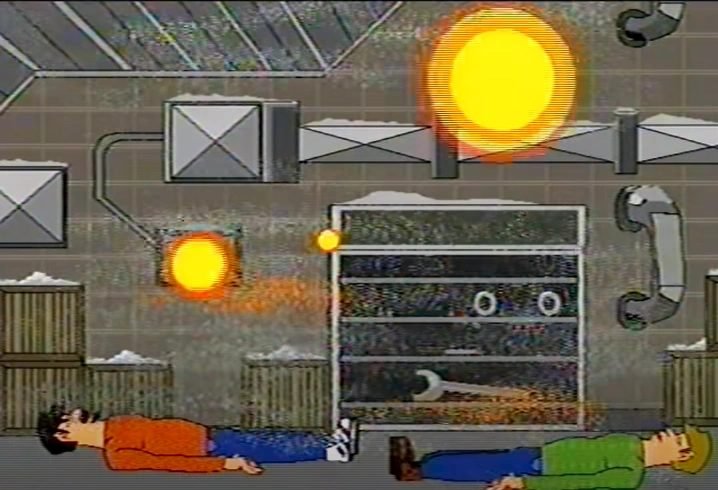
PilotRedSun
And based on his animations and songs, I created my alias and started producing an EP inspired by him. « Boxes » was the name of that EP, very enjoyable indeed, quite basic but enjoyable, it had lovely melodies.
The day I finished that EP, I couldn’t contain my happiness. I remember going downstairs and yelling to my mother that I had finished an EP, super happy and she was happy for me, without understanding what I was saying. That night I spent until 3 AM listening to the tracks, with a giant smile on my face. The pleasure was absolute.
GENDEMA – Boxes EP (2020)
By the way, that EP is no longer available anywhere on the internet. But I have uploaded it so you can listen to it here if you wish:
Download :
https://mega.nz/folder/dIYDhBza#2aX2T1OeObwbqAdv45DzEQ
Without a doubt, Pilot Red Sun remains an inspiration to me to this day, not so much trying to imitate it, but concentrating more on the parts and not the whole. Melodies, drum sequences, compositions, chords, etc.
Amar Adjona
Which artists or musical genres inspire you the most, and how do they influence your work today?
GENDEMA
The genres that inspire me the most are still Jazz (Bebop jazz particularly and its euphoria and almost narcotic improvisation), Nu-jazz, IDM, Drum and Bass (Intelligent especially), Dream-pop, Break beat, Neo-soul and Ambient. There are some more but, at the moment I would highlight those.
And to name a few artists that have inspired me a lot lately (Omitting Pilot Red Sun), I would say: Tzusing, fendoap, Nabihah Iqbal, Fazer, Alfa Mist, Yussef Dayes, Błoto, Forest Swords, Thom Yorke, Aphex Twin, Skrillex, Portico Quartet, Reversed Reference, JPEGMAFIA, Sully.
Amar Adjona
How would you say your music has evolved from your beginnings to your latest album? Are there elements you’re particularly attached to today?
GENDEMA
I notice the evolution in the quality of the progressions. From no progression or minimal and messy progression, until today when I feel that the progressions I achieve are more interesting and neat.
Of course I also notice the evolution in mastering and in the care of the volumes, in the attitude of seeking balance, and being able to communicate, for example, something grotesque or violent through the structure and not through gain or distortion.
Another thing that I feel as evolution is being able to generate much more captivating and juicy percussive sequences today. I love putting together percussions that add texture and body to the tracks. That is something that I always tried to do but only a year ago I was able to start achieving it the way I wanted.
And something that I feel I have always maintained is precisely that, the need to progress, the fear of repetition, the anxiety that this causes me (which is perhaps something I want to reduce) and the search for catchy melodies.
Amar Adjona
You often use reversed samples in your compositions. What attracts you to this technique, and how do you use it to create particular atmospheres or effects in your tracks?
GENDEMA
I always loved sampling and I will continue to love it, because I love working on already made sounds and modifying them as I please.
I started to reverse sample based on some tracks I once heard whose names I honestly don’t remember, but I think they were downtempo tracks and I loved the results. I felt that by reverting certain melodies or voices, very interesting textures were generated that I could use to structure orchestras of sounds that people could not identify. I love that kind of alien characteristic.
But, it was something I discovered while playing, I liked it and I adopted it as one of my many techniques to generate melodies.
Amar Adjona
Do you mainly work alone, or do you collaborate on certain stages of your creations? What role does the collective play in your creative process, and how does it influence the final result of your compositions?
GENDEMA
I work alone, even when I work on a feature (there have been few occasions) I work alone.
I’m not used to sharing my creative processes with anyone, not even as a designer.
It’s a personal thing and I guess it has to do with insecurities.
I’m completely sure, because it’s happened to me, that if I had someone next to me, I wouldn’t be able to concentrate on making music the way I wanted. I don’t feel free and comfortable if there’s someone else in the same place as me while I’m producing music.
I’m not proud of this, nor does it worry me. I really think it’s just part of my identity as a person and my insecurities.
But, I must also say that there are few things I enjoy more than sharing my creations or simply music that I liked with friends and sharing an intimate moment of sitting together to listen to something in detail, with good sound equipment, and discussing what things we consider better or not so good. I love to feed off of other people’s thoughts regarding my music and the music I like in general.
Amar Adjona
Is your music influenced by other art forms, such as painting, literature, or cinema? If so, could you give concrete examples of this influence?
GENDEMA
Oh, cinema, without a doubt. Especially Iranian cinema, Russian cinema, French cinema and Italian cinema.
I feel that the expressiveness of the cinema of these countries shakes me and tells me « You have to do something! » and that internal movement fills my head with thoughts about society, humanity, nature, pleasure, pain, love, etc. And if I don’t externalize those thoughts, I can’t calm my head and be at peace. They generate a need to express myself because I’m seeing situations that touch many sensitive fibers in me.
Cinema and music are the only two art forms that have made me cry for 1 hour straight. And I need to transform that emotion into something that sounds good to me and not let it die once I dry my tears.
Amar Adjona
What role does live performance play in your career? Do you have memories or powerful concert moments that had an impact on you?
GENDEMA
Curious question. I have never performed live.
I would do it with no problem if I were invited to do it, especially as GENDEMA.
But no, the opportunity hasn’t arisen and no one has invited me to do it.
I’ve thought about organizing something on my own but, I don’t know, it sounds a bit weird to me to organize an event to “force” people to listen to me live haha. I mean, I feel like the right thing to do is to wait for people or someone to ask me to do it.
Amar Adjona
What message or values do you hope to convey through your music? Do you believe music can actually provoke change in society?
GENDEMA
I think that music cannot generate significant changes in society, it can only accompany them and give them more visibility.
I am a staunch defender of the idea that artists are not more important people for being artists. Another separate issue is when artists gain a lot of media attention, which I also criticize in the sense of fanaticism that often does not allow certain people to question the artists they consume. And I also criticize those artists who forget that they are ordinary people and that nothing gives them the right to feel superior to anyone.
People are the protagonists of change. Artists can give their opinion and generate our own things, but we are just people like everyone else. With the only difference of creative power.
Can we use that creative power and ingenuity to change things in society? Sure, but it won’t be through music, it will be by putting our bodies and minds in the right places and actively participating in society.
My message in music will never be completely concrete due to its instrumental character and its abstraction, but if there is something that is always present in my music is the HUMAN component. Although many times it doesn’t seem so because of the amount of abstract things you will see in my music. But if you concentrate, you will be able to notice it.
My music is humanistic.
I concentrate on that, I don’t try to generate fantasies or escape routes, I try to focus on how incredible this world is and on human feelings that mark me personally.
Amar Adjona
How do you envision the future of GENDEMA? Are there directions or experiments you’d like to explore in your upcoming projects? Are there any concepts or sounds you’re excited to dive into in your future creations?
GENDEMA
I see the future of GENDEMA as a path whose destiny I do not know but I like the way it looks. I mean, I have no idea where this will end, because music for me is and will remain a hobby. My aspirations with GENDEMA are simply to keep progressing to sound more and more like I like and with the quality/creativity of the artists I admire.
I am seriously thinking of starting to work with people who want to sing on my projects. I’m in the process of accumulating some contacts for that, from people who are dedicated to singing.
I don’t deny that, deep down, there is something that also catches my attention, and that is the possibility of performing live in some kind of live dj set. I honestly believe that the experience of putting together a set to share it with people and live that moment together would feel great. So, that would count as one more aspiration. But for that to happen, I have to wait for someone to want to work with me in that sense. If it doesn’t happen, I guess the desire will lead me to organize it on my own at some point.
Amar Adjona
How do you perceive the need for recognition in your life as an artist?
Not necessarily out of vanity, but as a desire to bring about change, to reconcile, to humanize. This change can only happen if the public is aware of your work, which involves a certain level of notoriety. However, this notoriety also carries the risk of feeding the ego and getting lost in it. Is this something you often think about? How do you manage this balance between creation and promotion, between marketing and ego?
GENDEMA
The recognition of my music as something « good » by listeners is something I like, obviously. It makes me feel good and motivates me, although I must say that the first person to enjoy my music is me. And if I don’t enjoy listening to an album of mine before uploading it, I don’t upload it.
And that recognition, of my music, of my creations, is the only one that really interests me. That’s why you won’t see almost any photos of me out there. I feel that for now, and because of my personality, the best decision is to keep GENDEMA with as little exposure of my person as possible.
And I also think that my image wouldn’t really add anything positive to GENDEMA. But this is just my way of seeing it.
GENDEMA is human because of its music, because of its covers, its concepts. And also, in a very small percentage because of the person behind it, who isn’t exactly 100% hidden, it’s not that difficult to get photos of me that are floating around. The few that exist are enough.
The fact of gaining notoriety (if it were to happen) doesn’t worry me from an ego point of view. It took me a while to understand how, but I already have my methods to not let ego take over me. I know very well how limited I am as a human being and artist, and I have great confidence in the honesty of my totally horizontal vision of society from my position as an artist, where I do NOT feel above anyone and more special than anyone. Of course I do not feel less valuable than other people, and at the same time I also know that I am less of an artist than artists that I admire, logically, and this does not make me feel bad or prevent me from continuing to create. Because in any case I am still happy with what I am capable of creating within all my limitations.
Since I have true consciousness, I have been ashamed and embarrassed to be treated in a « special » way in certain contexts, I don’t like it, I know it is not appropriate. And I don’t care how many artists I see demanding special treatment or things that a normal person could not demand, I do not act in that way.
I myself have seen artists who, when I discovered them, were totally unknown, and within a year they were already touring regionally within the continent, and they began to behave/show themselves in a more « haughty » or « arrogant » way and less like an « ordinary person who makes music ». I understand that everyone deals with their shortcomings as best they can, and that a life with a lack of attention and desires focused on recognition instead of enjoying making art, leads to that.
In my mind, low-profile artists, such as « Aphex Twin » to give a well-known example, have a more genuine artistic recognition. Because no one loves Aphex Twin conditioned by his image, the guy is his music and his audiovisual expressions. The protagonist is Aphex Twin and not Richard D. James. And that’s really cool.
I look for and am interested in artists who are like my real-life friends, like people I love and people I trust. I’m not saying I’m only going to listen to artists that I would like as people haha, obviously. But I’m only going to follow, admire or consciously fund these ones. Who would support or fund someone that if you passed them on the street as a stranger, you would dislike their attitude and their way of relating to others? It’s certainly dumb to give your money/time to a person that in real life you would not have as a friend.
Amar Adjona
Can spirituality exist in a “profane” setting?
In other words, is it possible to find a form of spirituality devoid of conventional religious references, but that still addresses the search for meaning, depth, and connection that some associate with the spiritual, especially in a capitalist context that often prioritizes the material over the metaphysical, and amid the exhaustion caused by traditional religions’ historical baggage? Do you see this as an artist ?
GENDEMA
Of course it can exist, as solidarity exists today in a world whose predominant socio-economic system seeks to alienate you and immerse you in seeking pleasure and looking out for your own interests without being affected by what is going on around you.
The growth of exceptism as a way of life is undoubtedly a consequence of the constant cyclical crises that we go through as a society in the last years.
The crisis of faith is partly a consequence of the crisis of confidence in general within our society, which is increasingly involved in internal conflicts of workers against workers that isolate them in their own homes out of fear.
Added to this is an orchestration of messages through social networks directed at our youth telling them that everything that happened in the past will always be worse, and that part of progress is forgetting and abandoning everything that has to do with principles and values of the past, including, for example, religions. Instead of being objective and being able to find within them very valuable values and principles that we should not forget because they have forged incredibly positive things in our history.
This “simplistic tale” that Christianity is bad because Christians have committed massacres or there were abusive popes honestly seems reductionist, vague and part of a naive progressivism that benefits different spheres of power.
There are traditional values of humanity that we should never have abandoned and I am convinced of this. Of course one finds valuable many progresses that we have made as a society to accept, validate and incorporate new ways of expressing ourselves as human beings that were previously wrongly frowned upon. But one thing does not take away from the other.
« Do what you want! » is the mainstream message today. « Life is too short to not do such a thing. » All concepts that seek to convince people to stop worrying so much about others and concentrate more on themselves. I wonder who would benefit from that happening…
I wish that each person experiences spirituality as they feel best. But I want to say that, if your spirituality ignores the other, your own species, for me it’s not spirituality. It’s an esoteric excuse to get rid of certain problems and be calmer. Which as a tool for personal well-being seems great to me, but if it only stays that way, it’s literally the same thing that the system proposes, but without screens and with a reduction in consumerism. And a person like that is perfect for the system, since the less you connect with others and the more isolated you are, the easier it’s for them to continue operating. It is easier to operate against individuals than against communities.
Of course we can generate new forms of spirituality. And all are welcome as long as they do not cause harm to others.
There are spiritual actions that happen daily in this anti-humanity world context. Without a doubt. It’s impossible to defeat the human spirit. Much less when it is mobilized by collective causes.
I do not only think of this as an artist, my art carries part of my spirit and for me making music is a spiritual activity. It connects me with myself, with my faith, with the sacred and with others who listen to my music and let it into their homes.
It’s not only that it’s possible to live spirituality in this context, it’s a duty.
Spirituality, like any activity that takes us away from individualism, from irrational consumerism, from the constant and selfish pursuit of personal pleasure, is a strictly revolutionary act of resistance.